

Contact us
The importance of C. difficile Diagnostics
Follow the clinical guidelines – multi-step algorithm testing
Supports appropriate isolation and treatment by providing both screening and toxin results at the same time
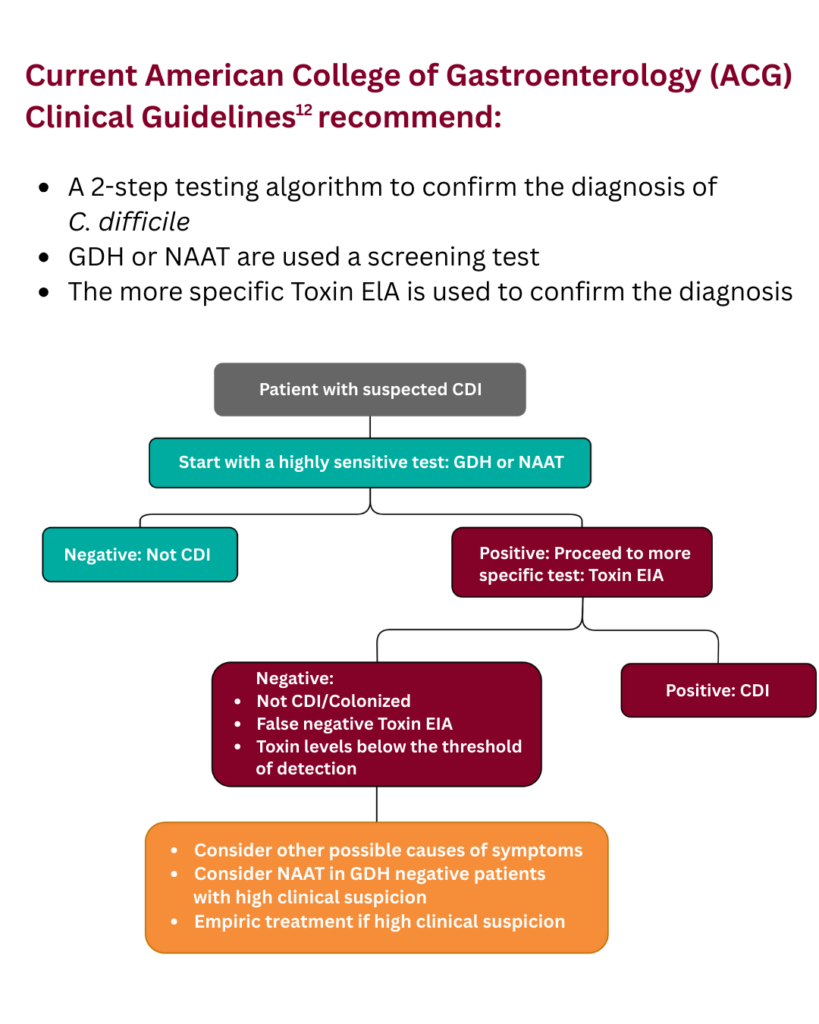
There are many different ways of testing for C. difficile infections. Laboratories which follow a multistep algorithm recognize that a positive toxin result is necessary to define clinical disease. Algorithm testing with GDH antigen or NAAT, followed by an EIA toxin test to confirm the active disease, is considered the best-performing algorithm. An efficient approach is to screen samples simultaneously for GDH and toxins A & B using an assay that includes both targets in one test— the C. DIFF QUIK CHEK COMPLETE® test
Properly distinguishing between true infections and carriers is crucial to protecting patients from unnecessary treatments. Rapid and accurate identification of toxigenic C. difficile allows for appropriate treatment when needed, allowing patients to recover their health, reconnect with loved ones, and reclaim their quality of life.
What about my “pre-agreed institutional criteria” for stool testing? That’s the first step in my algorithm, right?
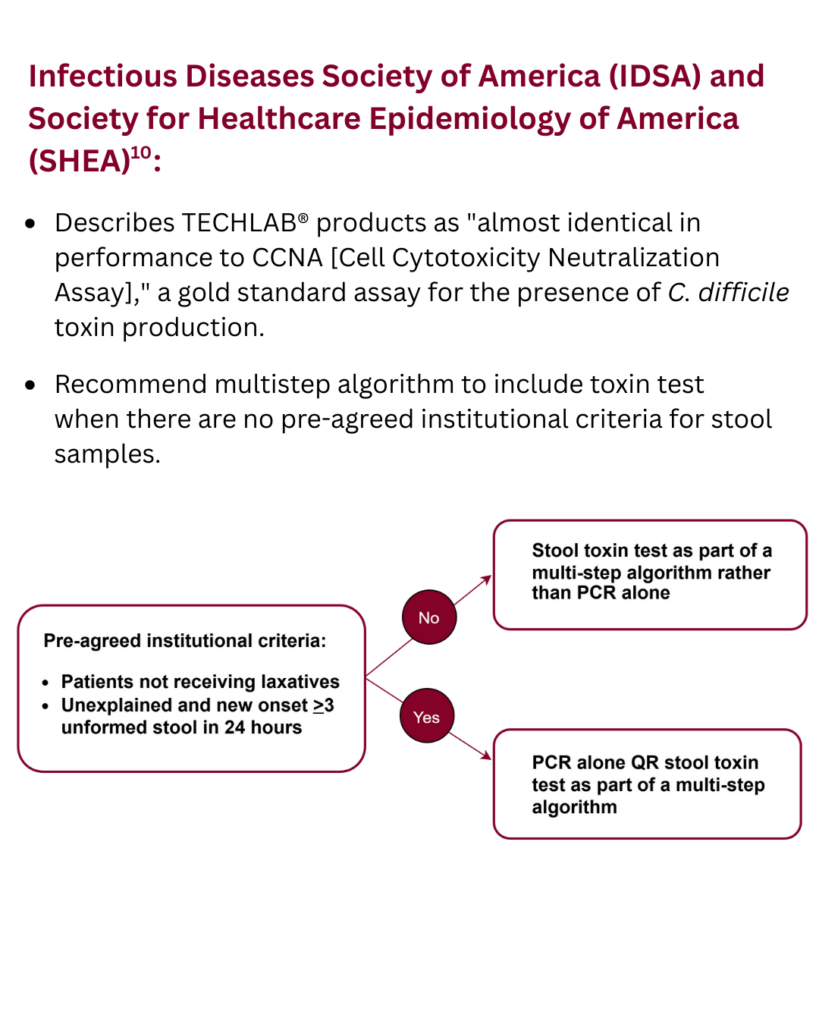
While the 2021 ACG guidelines do not recommend NAAT-only testing for CDI, the 2018 IDSA/SHEA Guidelines do allow it with pre-agreed institutional sample criteria (i.e.,≥ 3 loose or unformed stools in ≤ 24 hours with a history of antibiotic exposure). However, the pre-agreed institutional criteria are not part of the testing algorithm and the positive predictive value (PPV) of this approach is lower than that of a two-step algorithm often leading to adverse outcomes.
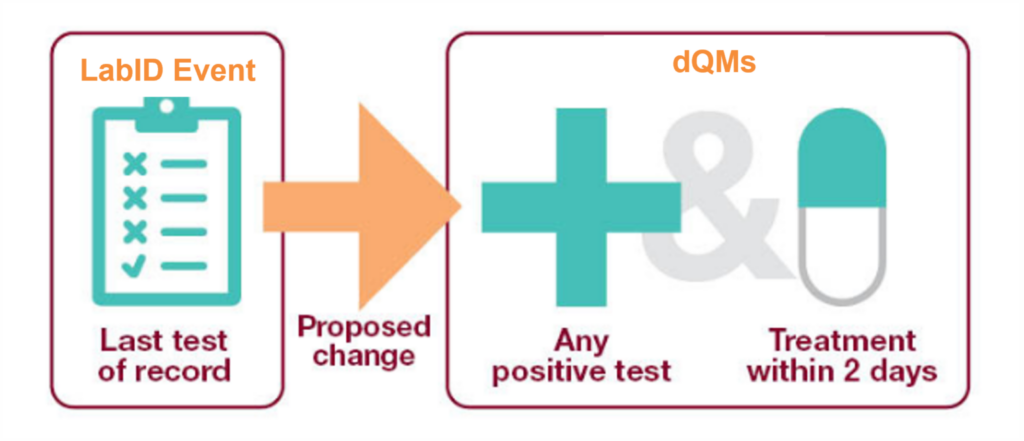
A 2023 update from SHEA/IDSA/APIC announced a proposed modification to the National Healthcare Safety Network’s (NHSN) C. difficile infection reporting guidelines. In the past, the last test of record defined a C. difficile infection as a reportable event. The proposed new C. difficile infection event definition includes any positive test and treatment initiated within 2 days of the positive C. difficile test as a reportable event.
Discover C. difficile testing options
Get in touch
If you have questions, need support, or would like more information about our products and services, please fill out the contact form and we will get back to you as soon as possible.
FAQ:
Accurate diagnosis helps distinguish between active C. difficile infection and asymptomatic colonization, reducing unnecessary treatment and supporting better patient care.
Many individuals can carry C. difficile without symptoms. Diagnostic testing is therefore essential to identify patients with toxin-producing infections who require treatment.
Current guidelines commonly recommend a multi-step diagnostic algorithm that combines different test methods to improve accuracy and support appropriate clinical decision-making.